
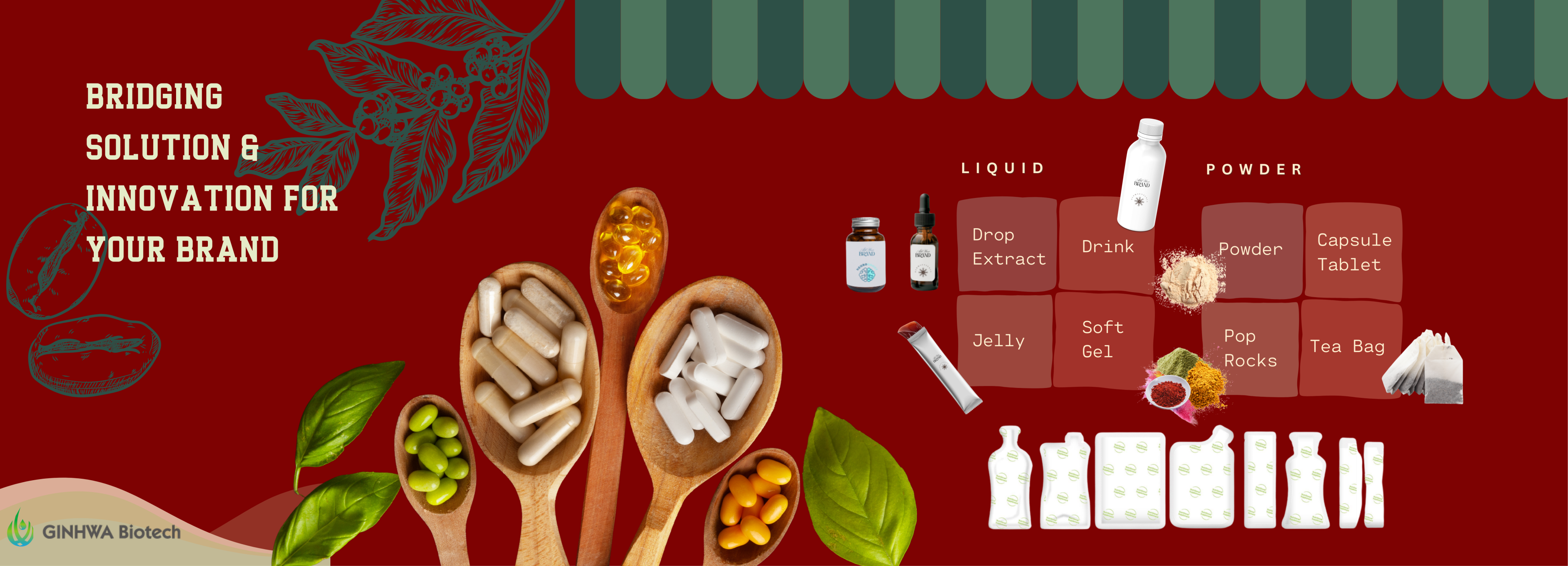

Liquid Sachet
| Name | Capacity | Size |
|---|---|---|
| Gourd-Shaped Horizontal Shaped Pouch | 15ML / 20ML | 70mm × 160mm |
| Patented Pouch Type | 25ML / 30ML | 80mm × 150mm |
| Spout Aluminum Pouch / Square Pouch Horizontal Shaped Pouch | 45~65ML | 100mm × 160mm |
| Gourd-Shaped Horizontal Shaped Pouch | 20~30G | 75mm × 150mm |
| Strip-Shaped Horizontal Shaped Pouch | 20G | 50mm × 150mm |
What products are Liquid Sachets suitable for?
Liquid Sachets are ideal for developing concentrated functional drinks, enzyme drinks, botanical extracts, collagen drinks, vitamin supplements, beauty essence drinks, and juice-flavored liquids. This format offers key advantages such as easy portability, precise dosing, ready-to-drink convenience, and good shelf stability, making it a mainstream packaging option across e-commerce brands, dietary supplement channels, convenience retail, and the functional drink market.
Liquid Sachets can support different viscosity levels (clear liquids / concentrates) and a variety of shaped pouch designs, allowing brands to build stronger product differentiation and visual recognition based on positioning.
Liquid Sachet types and packaging specifications
Gin Hwa offers a wide range of Liquid Sachet formats that can be selected based on formula concentration, target audience, and consumption scenarios:
- Gourd-shaped spout pouch (15ml / 20ml, pouch size approx. 70mm × 160mm)
Suitable for functional drinks, botanical extracts, and beauty essence drinks. - Patented pouch format (25ml / 30ml, approx. 80mm × 150mm)
Suitable for high-concentration botanical extracts and multi-ingredient functional drinks. - Spout aluminum pouch / square pouch (45–65ml, approx. 100mm × 160mm)
Suitable for larger-volume nutrition liquids, kids’ drinks, juice drinks, and sports supplementation. - Gourd-shaped spout pouch (20–30g, approx. 75mm × 150mm)
Suitable for puree-style formulas and plant-based concentrates. - Long strip-shaped spout pouch (20g, approx. 50mm × 150mm)
Suitable for light, refreshing liquid formulas and entry-level functional drinks.
Packaging material options include:
- Gloss film, matte film, aluminum foil structures, multi-layer barrier films
- Patented shaped pouch designs, easy-tear notch
- Logo plate printing and full visual planning
MOQ will be adjusted based on pouch complexity and printing requirements.
For spec recommendations, feel free to contact us
Ingredients and formulation requirements for Liquid Sachets
Liquid Sachets can carry liquid formulas with various concentrations and functional claims, making them a highly customizable format:
Compatible ingredients:
- Herbal botanical extracts and multi-ingredient concentrates
- Collagen peptides and low-molecular-weight peptides
- Liquid vitamins and liquid minerals
- Enzyme liquids and juice concentrates
- Amino acids and sports nutrition ingredients
- Functional ingredients such as plant polyphenols
Formulation requirements and limitations:
- Liquids must have suitable flow properties for filling to avoid line blockage.
- Heat-sensitive ingredients are recommended for low-temperature filling or post-addition processing.
- Formula pH must be compatible with the packaging structure to prevent leakage or quality degradation.
- If the formula contains proteins or botanical components, sedimentation and phase-separation stability tests are required.
- Viscosity should be adjusted based on pouch type and spout design to ensure a consistent drinking experience.
- High-concentration liquids require evaluation of sterilization methods and shelf-life stability.
Liquid Sachet dedicated process management and three-tier quality assurance
1) Tier 1: Liquid Sachet raw material and process control
Key priorities for Liquid Sachet production include concentration adjustment, homogenized blending, filling accuracy, seal strength, and stability control. Gin Hwa has established a complete liquid production line in accordance with international food safety standards, enabling a one-stop, in-house process for every step.
Raw material identification and specification analysis
Verify the sources, specifications, and test reports of botanical extracts, juice concentrates, functional ingredients, and more, as the foundation for subsequent formula development.
Liquid formula blending and homogenization
Blend and homogenize according to the formula ratio to ensure functional components are evenly distributed throughout the liquid, improving drinking experience and stability.
Concentration, pH, and viscosity calibration
Test and adjust concentration, pH, and viscosity to balance formula safety, taste, and smooth filling performance.
Filling flow rate and fill weight control
Use automated equipment to precisely control fill weight and flow rate, ensuring consistent dosage in every Liquid Sachet and compliance with labeling.
Seal strength and sealing integrity
Inspect seal strength, pressure resistance, and fold resistance to ensure shaped pouches do not leak or rupture during transportation and retail display.
Appearance inspection and phase separation monitoring
Check for separation, sedimentation, color, and bubbles to maintain consistent visual quality and drinking experience.
Retention samples and shelf-life stability testing
Conduct stability tests under different temperature and time conditions, tracking whether concentration, color, and taste remain within specifications.
Packaging labeling and production scheduling management
Establish a batch-code and packaging label system, supported by project-based scheduling, to enable channel management and traceability control.
2) Tier 2: International quality assurance standards
Gin Hwa’s Liquid Sachet production line complies with multiple international food safety standards, supporting domestic channel brands, e-commerce brands, and cross-border OEM/ODM partnerships.
From raw material receiving and liquid blending to sterilization, filling and sealing, and finished product inspection, every step operates under international food safety management systems, providing a verifiable control foundation for Liquid Sachet quality, safety, and stability.
3) Tier 3: External audits and government inspections
The facility undergoes regular inspections by regulatory authorities. If any abnormalities occur, CAPA (Corrective and Preventive Actions), batch traceability, and finished product recall procedures will be initiated in accordance with regulations, ensuring every Liquid Sachet batch has final food safety protection before market launch.
Liquid Sachet OEM FAQ
Q1|What is the MOQ for Liquid Sachet OEM?
MOQ varies depending on pouch type, printing method, and formula complexity. In general, shaped pouches allow flexible planning—starting with a launch batch for new product release, then scaling up to mass production based on channel demand and sales performance.
Q2|Will Liquid Sachet products develop sediment or separation? How can it be improved?
Formulas containing botanical extracts and protein-based ingredients may develop sediment or separation during storage. Gin Hwa can optimize the formula structure through homogenization, filtration, and stabilization technologies to improve appearance and drinking experience while maintaining functional positioning.
Q3|Can Liquid Sachet products be made with different flavors and sweetness levels?
Yes. Acidity, sweetness, and “juice-like” taste can be adjusted based on market positioning, with options ranging from a light and refreshing profile to a rich juice-style profile or flavor settings designed specifically for beauty/maintenance essence drinks.
Q4|How long does the Liquid Sachet OEM development process take?
The typical development process includes “formula confirmation → sampling → flavor adjustment → packaging confirmation → pilot run → mass production.” Common lead time is around 4–8 weeks, and the actual timeline may vary depending on formula complexity and the level of packaging customization.
Q5|Can we proceed with Liquid Sachet OEM if we already have a liquid formula?
Yes. If you already have a liquid formula, Gin Hwa can help adjust concentration, stability, mouthfeel, flowability, and filling parameters to ensure the formula meets Liquid Sachet production standards and channel requirements.