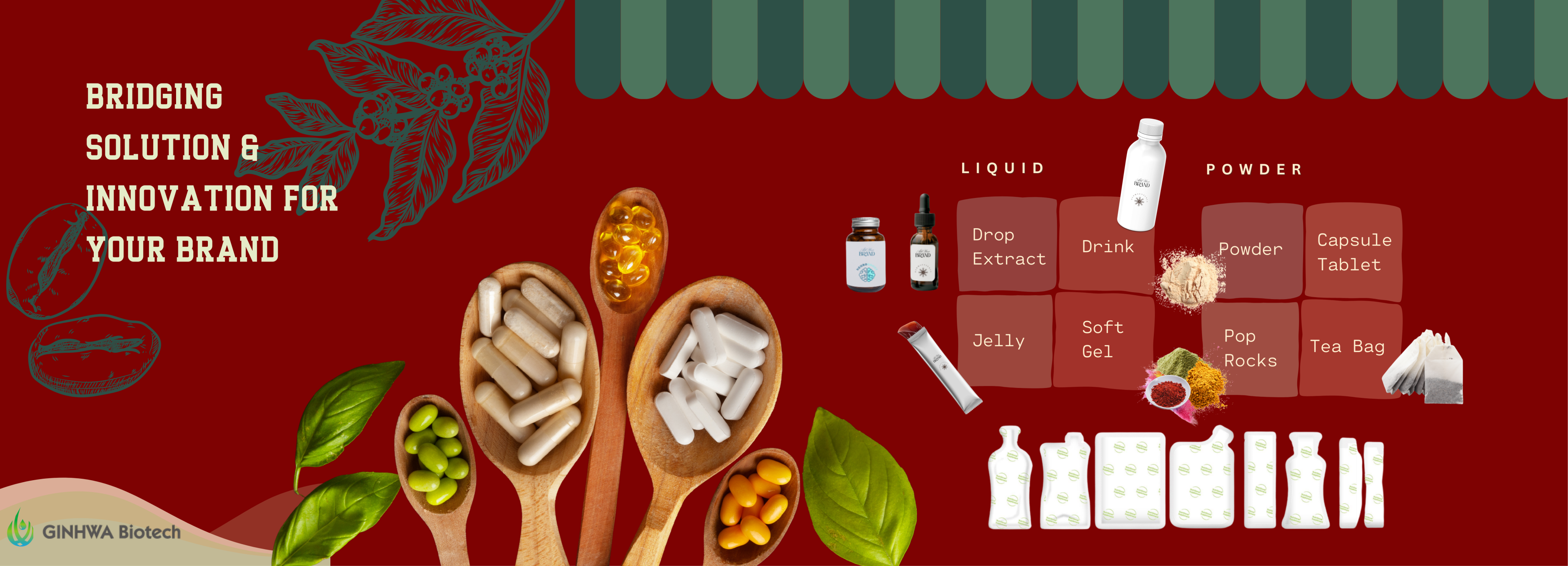
What products are suitable for Jelly?
Jelly formats are suitable for beauty supplements, collagen Jelly, enzyme Jelly, fruit & vegetable Jelly, probiotic Jelly, energy Jelly, and children’s nutrition Jelly products. This format features easy consumption, portable convenience, great flavor, and versatile usage scenarios, and is commonly used in beauty & skincare, sports supplementation, daily wellness maintenance, and children’s nutrition markets.
Jelly can support different textures such as water-like liquid, Jelly-style, and bouncy C-style Jelly. Acidity-sweetness balance, thickness, and plant-based formulations can be customized based on brand positioning, making Jelly a popular format for e-commerce brands, retail-channel brands, and new dietary supplement product development.
Jelly types and packaging specifications
Gin Hwa offers multiple Jelly packaging options. You can select the most suitable specification based on consumption scenarios, texture, and product positioning:
- Gourd-shaped horizontal spout pouch (approx. 20–30g, size approx. 75mm × 150mm):
Ideal for beauty Jelly, multi-ingredient beauty Jelly, juice Jelly, and concentrated energy Jelly.
Can be made as: liquid / Jelly / C-style Jelly. - Long strip horizontal spout pouch (20g, size approx. 50mm × 150mm):
Ideal for sports supplementation, daily nutrition Jelly, and children’s chewable Jelly.
Can be made as: liquid / Jelly / C-style Jelly. - Back seal (15g or 20g, size 30mm × 132–150mm):
Ideal for value-oriented Jelly, small stick supplement packs, and mass retail products.
Can be made as: Jelly.
Packaging customization options:
- Glossy / matte film, aluminum foil structures, easy-tear notches
- Logo plate printing, special-shaped pouch designs
MOQ varies based on pouch complexity and printing requirements.
To confirm the most suitable specification, feel free to contact us
Ingredients and formulation requirements for Jelly
Jelly formats can accommodate a wide range of ingredients, and the product claims can be strengthened through texture and viscosity adjustments.
Applicable ingredients:
- Fruit juice concentrates, fruit/vegetable purees, botanical extract liquids
- Collagen peptides, hyaluronic acid, vitamin C / B-complex
- Probiotics (additional evaluation required for viability and encapsulation approach)
- Enzyme powders, botanical blend powders
- Amino acid supplementation ingredients (sports / energy products)
Formulation considerations and limitations:
- The gelling system (pectin, carrageenan, konjac, gelatin, etc.) must be adjusted in ratio based on desired texture.
- Heat-sensitive ingredients should avoid high-temperature filling ranges.
- High-acid, high-sugar, or protein-containing ingredients require compatibility and stability testing in advance.
- Bouncy C-style Jelly requires additional stability design for structure and elasticity.
- Viscosity must be controlled to ensure smooth filling and consistent consumption experience.
Jelly-specific process management and 3-tier quality assurance
1)Tier 1: Jelly raw materials and process control
Jelly manufacturing must balance texture stability, viscosity control, filling temperature, and packaging integrity. Gin Hwa manages each standardized checkpoint to ensure every batch of Jelly delivers consistent flavor and safety.
Raw material identity verification and specification confirmation
Verify the source and specifications of ingredients such as fruit juice, gelling agents, and functional components to ensure compliance with Jelly formulation and regulatory requirements.
Acidity-sweetness balance and viscosity adjustment
Adjust acidity-sweetness ratio and viscosity based on brand positioning and target consumers to maintain smooth intake and consistent flavor.
Gelling system stability testing
Test stability and elasticity across systems such as pectin, carrageenan, konjac, and gelatin to prevent layering and syneresis.
Temperature protection for heat-sensitive ingredients
Adjust process temperature and ingredient addition sequence to reduce the risk of heat degradation for heat-sensitive components such as vitamins and enzymes.
Filling, sealing, and appearance inspection
Control fill volume and temperature, and check seal integrity, pouch fullness, and print quality to maintain consistent product visuals and user experience.
Packaging strength, pressure resistance, and sealing tests
Test packaging pressure resistance and drop strength to reduce leakage risks during logistics and stacking.
Retention samples and stability monitoring
Track color, texture, separation, and syneresis to build shelf-life stability data.
Labeling, batch code management, and production planning
Connect production, warehousing, and shipment information through batch coding to support traceability and channel management needs.
2)Tier 2: International quality assurance standards
Gin Hwa’s Jelly production process complies with international food safety standards and can support cross-border OEM/ODM needs for beauty brands, sports nutrition, children’s nutrition, and dietary supplement products.
From raw material receiving and formulation to filling, sealing, and finished product inspection, operations run under an international food safety system framework—so Jelly products can confidently meet both domestic and global market requirements.
3)Tier 3: External audits and government inspections
The facility is regularly inspected by competent authorities and follows required CAPA, batch traceability, and recall procedures to ensure Jelly products meet food safety requirements and regulatory compliance before launch.
Jelly OEM FAQ
Q1|What is the MOQ for Jelly OEM?
MOQ varies depending on pouch type, packaging printing, formula complexity, and whether fruit juice ingredients are included. In general, we can plan pilot runs and subsequent mass production batches based on project needs—supporting both new product launch and channel rollout.
Q2|Can Jelly be made with different textures? (e.g., chewy, smooth, liquid-like jelly)
Yes. By adjusting the gelling system, viscosity, and concentration ratio, we can create different textures such as chewy, smooth, or more liquid-like jelly. The sweetness-acidity balance and flavor intensity can also be fine-tuned based on brand positioning.
Q3|Can Jelly include blended beauty or functional ingredients?
Yes. Jelly can be formulated with collagen, vitamins, botanical extracts, amino acids, and other blended ingredients. Stability testing is required to evaluate acidity, protein heat tolerance, and mouthfeel consistency to ensure good texture and taste throughout shelf life.
Q4|How long does the Jelly OEM development process take?
The standard workflow is “formula confirmation → sampling → texture adjustment → packaging confirmation → trial production → mass production.” Typical development takes about 4–8 weeks, and the actual timeline depends on formula complexity and customization requirements.
Q5|Can we proceed with OEM if we already have a formula?
Yes. If you already have ingredients or an existing formula, Gin Hwa can help optimize viscosity, texture, heat-sensitivity tolerance, and filling compatibility so the formula can run stably in Jelly production and meet channel and market needs.