
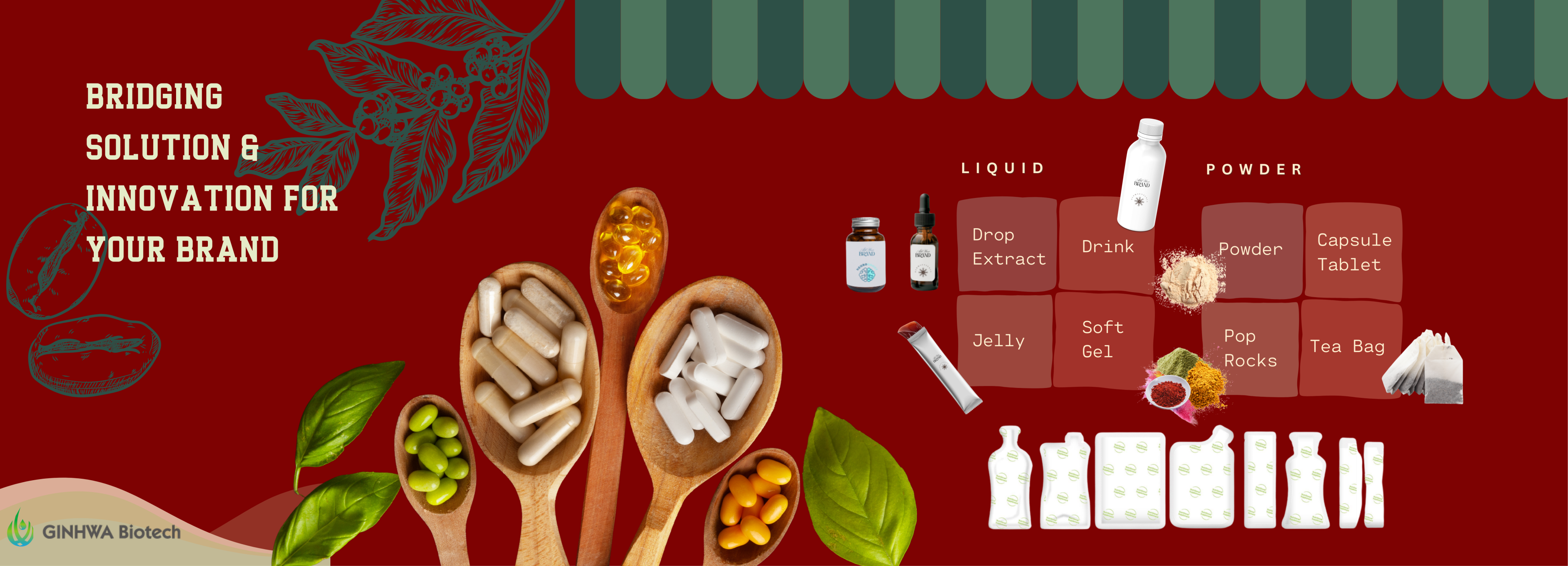

Powder
| Name | Capacity | Size |
|---|---|---|
| 5×7 Sachet | 1–2g | 50mm × 70mm |
| 7×7 Sachet | 3–4g | 70mm × 70mm |
| 5×10 Sachet | 10g | 50mm × 100mm |
| Back-Sealed Sachet | 2–3g | 28mm–100mm (varies by content) |
What products are suitable for the Powder format?
The Powder format is ideal for developing enzyme powders, functional supplement powders, botanical powders, multivitamin powders, sports nutrition powders, dietary fiber powders, and health base blends. Powder sachets offer easy portability, precise serving size, and consistent dose control, making them well-suited for e-commerce brands, dietary supplement brands, and channel partners to quickly build multi-flavor, multi-function product lines.
Powder formulas can be combined with plant-based powders, phytonutrient blends, extract powders, and other functional ingredients. Single-serve doses can be customized from 1–10g, supporting sampling, small-batch launches, and scalable mass production.
Powder product options and packaging specifications
Gin Hwa provides multiple Powder packaging specifications. The optimal option can be selected based on dose requirements, solubility, and product positioning:
- 5×7 sachet (1–2g): Suitable for enzyme powders, functional supplements, and lightweight formulas.
- 7×7 sachet (3–4g): Suitable for multi-ingredient blends, flavored drinks, and daily wellness powders.
- 5×10 sachet (10g): Suitable for sports nutrition and instant beverages with larger serving sizes.
- Back-seal sachet (2–3g): Size can be adjusted based on contents (approx. 28mm–100mm).
Minimum order quantities and packaging customization (aluminum foil, matte white, glossy film, printing, etc.) will be adjusted according to formulation characteristics and product positioning. Contact us to confirm the best-fit specifications
Ingredients and formulation conditions for the Powder format
The Powder format supports a wide range of health and functional ingredients, making it suitable for formulas targeting different market needs:
- Plant-based powders: Vegetable and fruit powders, grain powders, fermented powders, etc.
- Extract powders: Botanical extracts, herbs, and various functional ingredients.
- Microencapsulated powders: Stabilized forms for flavors, oils, or sensitive ingredients.
- Amino acids, vitamins, and minerals: Ideal as functional bases or core components for supplement formulas.
- Compound functional base blends: Can be formulated with 2–10+ ingredients based on target claims.
Formulation requirements and constraints:
- Powders must maintain adequate flowability for accurate filling and dosing.
- Moisture content must be controlled within a stable range to prevent caking and moisture absorption.
- Formulas with overly coarse particles or high fiber content may require milling or pre-treatment.
- Heat-sensitive ingredients may require low-temperature blending depending on needs.
- Particle size impacts solubility and mouthfeel, and should be adjusted based on product positioning.
Dedicated Process Management and Three-Tier Quality Assurance for Powder
1) Level One: Raw Material and Process Control for Powder
Powder production requires balanced control of blend uniformity, moisture management, filling accuracy, and packaging integrity. Gin Hwa manages the Powder workflow with standardized checkpoints, providing a one-stop in-house process from raw material intake to sachet shipment.
Raw Material Identification and Specification Verification
Verify ingredient sources, specifications, and inspection documentation to ensure alignment with formulation requirements and quality standards.
Milling, Sieving, and Blend Uniformity Testing
Adjust milling and sieving conditions based on formulation needs, and verify blend uniformity to prevent ingredient segregation.
Flowability, Moisture Content, and Particle Size Testing
Measure powder flowability, moisture content, and particle size distribution to reduce caking risk and maintain stable filling performance.
Sachet Filling and Weight Calibration
Set target weights and perform regular calibration to ensure accurate and consistent dosing in every sachet.
Seal Integrity and Packaging Tightness Verification
Check seal strength and tightness to prevent leakage, powder loss, and moisture ingress.
Packaging Structure Planning, Labeling, and Batch Code Management
Select packaging structures based on shelf-life requirements, and establish labeling and batch code systems to support full traceability.
Finished Product Testing, Retention Samples, and Stability Evaluation
Conduct appearance, weight, and basic physicochemical tests, retain samples for reference, and evaluate storage stability.
Production Scheduling and Shipment Control
Produce according to project batch schedules, control process timelines and shipment milestones, and reduce the risk of stockouts across channels.
2) Level Two: International Quality Assurance Standards
The Powder production environment and processes meet international food safety requirements, covering food safety systems, hazard analysis, and factory management standards. This supports supply needs for domestic and global brands, as well as cross-border OEM / ODM projects.
With multiple certifications, Gin Hwa can reliably support Powder product development and mass production, enabling brands to expand across channels and markets.
3) Level Three: External Audits and Government Inspections
The facility undergoes regular inspections by competent authorities and external sampling programs. In the event of any nonconformance, CAPA procedures, batch traceability, and recall processes are initiated to ensure every Powder sachet batch has full food safety assurance prior to market release.
Powder OEM FAQ
Q1|What is the MOQ for Powder OEM manufacturing?
MOQ varies depending on sachet specifications, the level of packaging customization, and formulation complexity. Standard 5×7 and 7×7 sachet formats are flexible and can support sampling, small-batch launches, or scaled mass production based on channel requirements.
Q2|Can Powder formulas include multi-ingredient blends?
Yes. Formulas can include 2–10+ ingredients, but blending ratios and process conditions must be adjusted based on powder flowability, particle size, and stability to ensure uniformity and consistent quality.
Q3|Can Powder solubility and mouthfeel be adjusted?
Yes. Flowability, particle size, sweet–sour balance, and the ratio of microencapsulated powders can all affect solubility and mouthfeel. These parameters can be tuned based on product positioning and target consumers to create a smoother texture or a more granular drinking experience.
Q4|How long does the Powder OEM development process take?
The typical process is “formulation confirmation → sample making → packaging confirmation → pilot run → mass production”. A common development cycle is about 4–8 weeks, and the actual timeline will vary depending on formulation complexity and customization requirements.
Q5|Can we proceed with OEM manufacturing if we already have a formula?
Yes. If you already have a formula, we can help optimize milling fineness, blending conditions, moisture content, and filling accuracy so the existing formula is better suited for Powder sachet production and storage conditions.